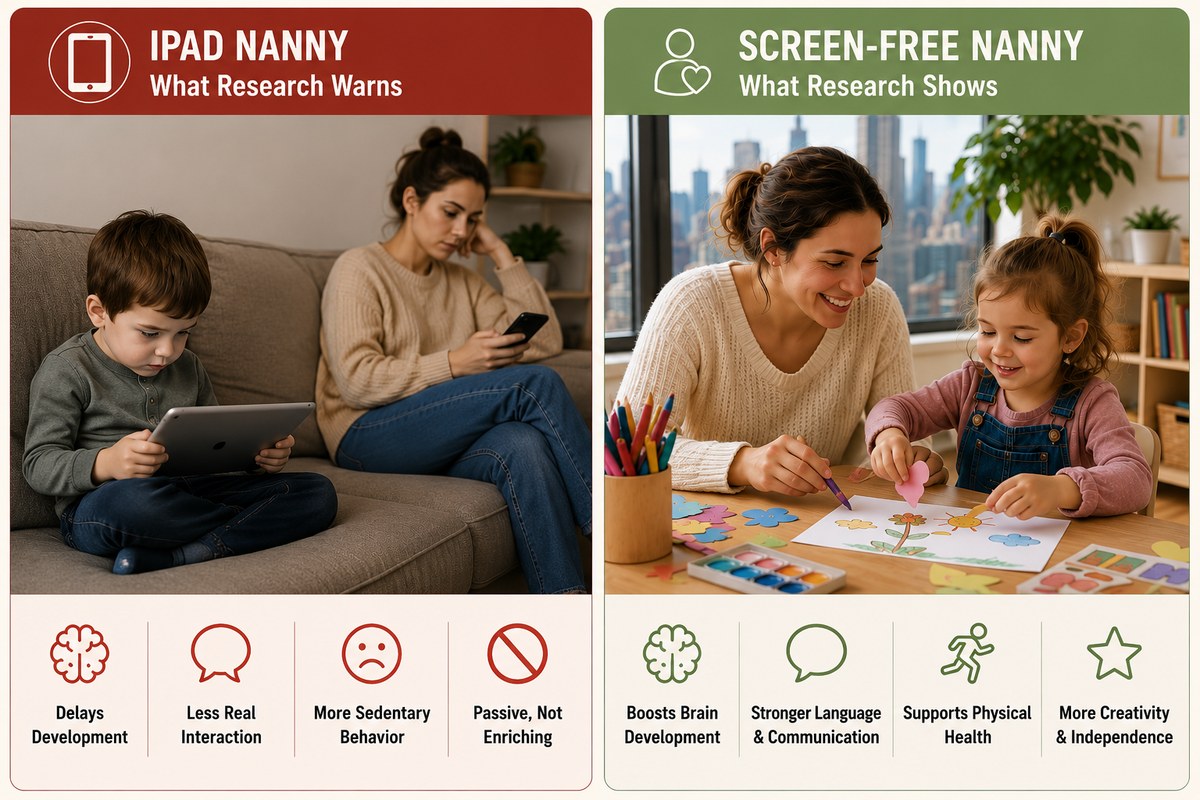
The "iPad nanny" has become a shorthand for a particular kind of childcare that Manhattan parents increasingly want to avoid. But what does the research actually say about screen time during early childhood?
What the research says about screen time
The American Academy of Pediatrics recommends avoiding screen time for children under 18–24 months, and limiting to one hour per day for children aged 2–5. The concern isn't screens themselves, exactly. It's what screens replace. Every hour a young child spends passively watching a screen is an hour not spent in conversation, imaginative play, physical activity, or direct human interaction — all of which are essential for language development, social skills, emotional regulation, and cognitive growth.
What "education-led" care actually means
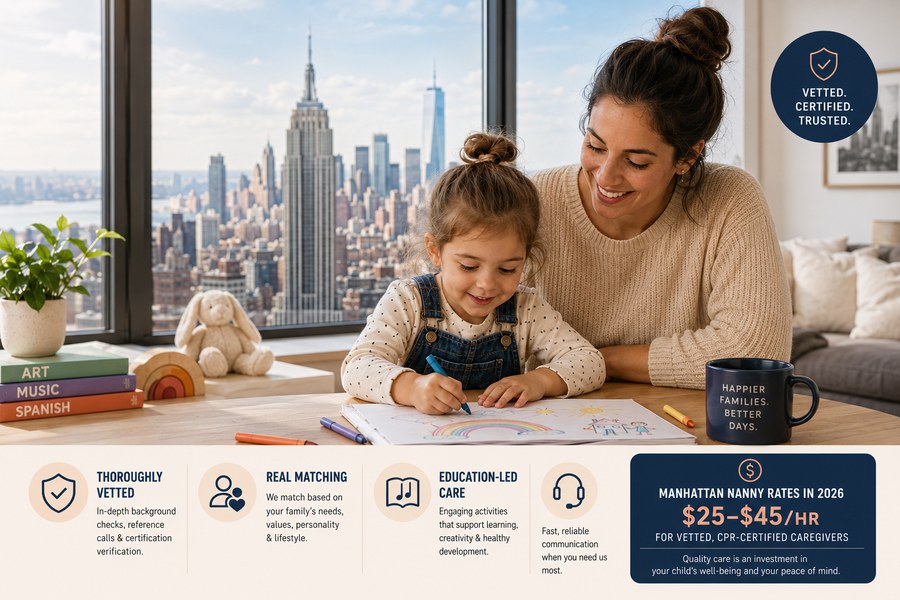
Education-led doesn't mean the nanny runs formal lessons. It means every session is thoughtfully structured around activities that enrich your child's development — arts and crafts that build fine motor skills, music that develops language and rhythm, outdoor play that builds physical coordination, reading that develops vocabulary, and conversation that builds social skills.
What to ask your nanny or agency
When interviewing a nanny, ask directly: what does a typical afternoon session with a 3-year-old look like? A nanny who describes specific activities — a particular art project, a favorite book, a game they play outdoors — is a nanny who genuinely thinks about the children they care for.